A shorter version of this first appeared as my monthly column in my hometown newspaper, the Barnstable Patriot: http://www.barnstablepatriot.com/news/20171024/crossroads-harvest-time-in-holy-land (27 October 2017)
Thinking of harvest time back home on Cape Cod draws to mind marshes clothed in bright red floating cranberries that are pictured in newspapers and cheer the hearts of those who frequent the back roads and byways of Cape Cod. Although commercial cranberry growers have dwindled in modern times, we still celebrate the sight of the bogs where they dot the landscape of the Cape, especially in their autumn splendor.
Likewise, it is harvest time in the Holy Land, in this case, the olive trees are ready to drop oil-rich savory treasures. Here the colors are muted: brown, stony fields form the backdrop for loosely scattered trees that are more broad than tall. The thick canopy of tangled branches support slender, dusty green leaves and black, brown or green olives, forming a crown held aloft by gnarly, twisted trunks. Only by standing very close to the trees can one see the precious thousands of olives that every tree will yield. The locals say that the trees produce on a biennial basis: every two years, the crop is bounteous in number, size and quality of olives, while in the alternate year, the trees seem to hold back on production, saving energy for the bumper crop the following year.


Both harvests require intensive labor of hands, legs, backs, and nowadays, machinery to bring the harvest to tables eager for their bounty. Whether cranberry bogs on Cape Cod or olive trees in the Judean hills, harvest time conjures up nostalgia for the old ways along with gratitude for the gifts of Mother Nature.
Tantur Ecumenical Institute, with its scholarly and interfaith missions, seems an unlikely steward of the olive harvest, but history reveals how Tantur came to manage some 500 olive trees on 122 dunam (about 30 acres). The property lies in what was once the hilly rural terrain between Jerusalem and Bethlehem. In recent decades, however, development has blurred the line between the city and its neighboring village. In the past couple decades, commercial, residential and highway construction now blur the edges: were it not for “the Wall” (Netenyahu’s so-called “Security Fence”), one couldn’t really see where Jerusalem ends and Bethlehem begins.
In the late 1800s, many Christian organizations began bringing various ministries to the Holy Land – schools, churches, medical services, and so on. Some denominations suspected that the intent of the others was to gain converts, and a kind of competition developed.
One group that moved in during that time was an Austrian chapter of the Knights of Malta, whose ministries have emphasized healthcare. They acquired the property where Tantur now sits, and built a hospital. The Knights left the surrounding olive groves intact, and preserved the agricultural enterprise along with their healthcare mission.
Later, the British controlled the property and used it to hold Italian prisoners of war during World War II. Finally, Notre Dame University purchased it in 1972, responding to Pope Paul VI’s request that they establish in Jerusalem a center of interfaith engagement and scholarship, in order to fulfill the interfaith commitments of the Second Vatican Council. Like the Knights of Malta, Tantur continues to cultivate and harvest the olives.
As many know, the olive trees that thrive in this dry, sandy soil loom large in biblical stories and historical records. Museums often display the large pottery jars that were used to hold olive oil and transport it, even on ships to places far from its production. Olive oil was precious for both cooking and light. And the trees are capable of extremely long life.
It takes five or six years for newly planted trees to begin to produce fruit plentiful enough for harvest, but then, year after year – even generation after generation – they continue to release their bounty to whoever is willing to devote the labor needed to harvest the olives.
Many people believe that some of the olive trees in the Garden of Gethsemane were there when Jesus meditated in agony on the night before he was crucified. Though possible, it’s unlikely. The average life span of these trees is 500 years, which still makes them among the longest-living trees on the planet. It is said there is one olive tree on earth that’s been certified to be 2000 years old, but attempts at carbon dating the trees in Jerusalem have been thwarted by the way the trees grow, gradually hollowing out in their trunks, where new growth then springs up. So the age of Gethsemane’s trees remains a question.
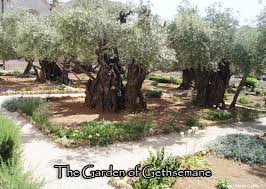
For centuries before Christ, however, and in all the centuries since, the olive harvest has been a mainstay of life, culture and economy throughout the regions surrounding the eastern Mediterranean. It’s been a rare privilege to witness the harvest here at Tantur.
In October, the harvest begins, and it goes on for many weeks. One by one, tree by tree, workers spread large sheets of porous fabric under the trees and climb the trees, literally shaking the trees and branches to loosen the olives. They move their ladders from tree to tree, and usually, the shaking doesn’t loosen all the olives, so workers “comb” the branches with their hands. It is hard physical labor, and although mechanical aids for loosening the olives are now available, many old-timers don’t like those devices, believing they bruise the olives and damage trees.
As the cloths fill with olives, they are gathered into wheelbarrows and transported to the cement floor of a garage-like room on the backside of Tantur, where workers winnow the olives, separating the leaves and twigs that cling, as these would adulterate the olive oil. Larger olives are cured in Tantur’s kitchen and served at meals, but most are bagged and about once a week, brought to the commercial olive press in Beit Jala, a small nearby town.
At the olive press, the bags are marked and workers wait, sometimes for hours, for their turn at the press. Jars of fresh olive oil are the end reward for all this work. The olive oil is then shared 50/50 between the Palestinian workers who do this hard physical labor, and Tantur, whose chef uses the oil all year for the meals we enjoy here.
Like the cranberry bogs on Cape Cod, the land bearing olive groves sometimes becomes more valuable to the owners if sold to developers, and as the olive groves decline in number and size, the price of olive oil escalates. It’s a familiar story as the agricultural age ceded to the industrial age, and perhaps explains why we nostalgically cling to the vestiges of our bogs on Cape Cod and the olive groves in Jerusalem.
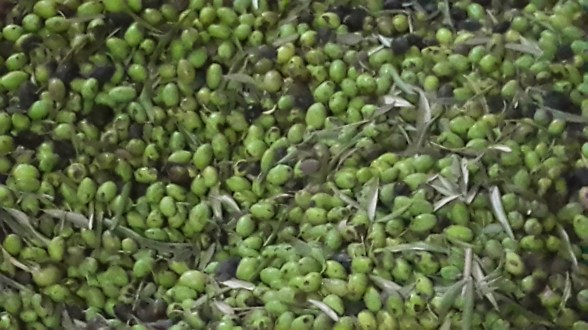 Photo by Diana Sayegh, Tantur staff.
A shorter version of this first appeared as my monthly column in my hometown newspaper, the Barnstable Patriot: http://www.barnstablepatriot.com/news/20171024/crossroads-harvest-time-in-holy-land (27 October 2017)

 Crossroads
Good piece. Who knew? See yesterday’s NYT for a story of olive oil in Italy and the impact of climate change. Best, M
Mary E. Hunt, Ph.D. Pronouns: she, her, hers Women’s Alliance for Theology, Ethics and Ritual (WATER) 8121 Georgia Ave. #310 Silver Spring, MD 20910-4933 USA 301 589-2509 | 301 589-3150 fax mhunt@hers.com Skype: maryhunt1 http://www.waterwomensalliance.org Donate to WATER | Sign up for WATER emails Combined Federal Campaign CFC # 23819
>
LikeLiked by 1 person
Thanks, Mary. I found that NY Times article about olive production in Italy and it was fascinating. I’m adding the link here for any readers who might be interested: https://www.nytimes.com/2017/10/24/climate/olive-oil.html?_r=0
LikeLike
That NY Times piece is very informative, and not only about the olive harvest. Thanks Mary! I’m adding the URL for the article here in case other readers would like to check it out: https://www.nytimes.com/2017/10/24/climate/olive-oil.html?_r=0
LikeLike
Hi Kathy,
I so enjoy reading your postings. As I read them I can see a published book of your stay in Israel and your experiences with the Tantur Institute. What an opportunity for you and bet you’ll hate to leave.
I was especially touched by the Mass at the tomb of Jesus. Also, the Mass when you read from St. Paul in English at the Palestinian Catholic Mass. It brought me back to a Mass in Arabic at the Church of the Annunciation in Nazareth. Thanks for the memory of this close moment.
With gratitude for your postings and your friendship.
Peace
Natalie
LikeLiked by 1 person
You are so good for my soul, Natalie! Your comments are lavish in their praise, I might have to get bigger hats!
I am so grateful for your friendship…
LikeLike